

Walk into any older family home and you will probably spot at least one piece that has quietly outlived everything else: a heavy wooden almirah, a dining table with a few ring marks from old tea cups, a bed frame that has been moved across three cities and still does not creak. Nobody remembers exactly when it was bought. It has simply always been there.
Now think about the last flat-pack piece you bought. How is it holding up?
This quiet contrast is one of the biggest reasons solid wood furniture is finding its way back into modern homes. For a while, fast and cheap furniture seemed like the smart choice. It was light, trendy and easy on the wallet. But more and more families are realising that furniture which needs replacing every few years is not really cheap at all.
In this blog, we will look at why solid wood is making a comeback, what makes it different from other materials, which woods are most popular in India, and how to choose a piece you will still love ten or twenty years from now.
What Exactly Is Solid Wood Furniture?
Let us start with the basics, because the term gets used loosely.
Solid wood furniture is made entirely from natural timber cut from a tree, with no layers of pressed chips, fibres or paper-thin veneers forming the main structure. A solid wood table top, for instance, is made from real planks of wood joined together.
This is different from:
- Engineered wood (MDF, particle board): Made from wood dust, chips or fibres glued and pressed into sheets.
- Plywood: Thin layers of wood glued together in alternating directions.
- Veneer pieces: A thin slice of real wood glued over a cheaper base material.
- Laminate finishes: A printed layer, often designed to look like wood, applied to a board.
Engineered options are not always bad. Good plywood is strong and has a place in modern furniture. But when someone says a piece is solid wood, they mean the real thing from the inside out.
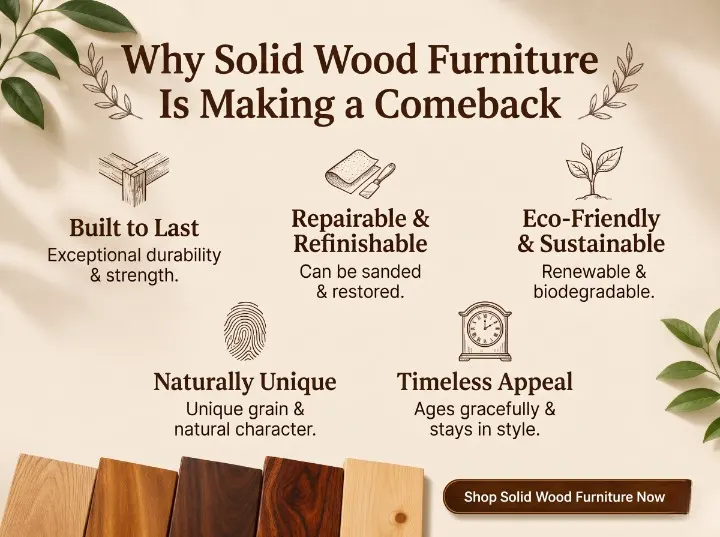
Why Solid Wood Furniture Is Making a Comeback
So why the sudden revival? It is not a single reason. It is a mix of practical thinking, changing values and plain good taste.
1. People Are Tired of Replacing Things
Many of us have gone through the same cycle. You buy a wardrobe or a table that looks great in the showroom, and within a few years the edges swell, the hinges loosen and the surface peels. You throw it away and buy another. Add up the costs over ten years and the “cheap” option often becomes the expensive one.
Solid wood breaks that cycle. A well-made piece can last for decades, and some last for generations. Buyers are starting to think in terms of cost per year, not just the price on the tag.
2. A Growing Interest in Sustainable Living
More households are thinking about what they bring home and what happens to it later. Furniture that ends up in a landfill after three years is wasteful. Solid wood, especially when sourced from responsibly managed plantations, is a natural and renewable material. It can be repaired, refinished and reused, which fits well with the idea of buying fewer things but buying them well.
It is worth being clear here: not all wood is equally sustainable. Ask your seller where the timber comes from and whether it is plantation grown.
3. The Return of Warmth in Home Design
For years, interiors leaned towards cool greys, glossy surfaces and minimal, cold finishes. Now the mood is changing. People want homes that feel warm, lived in and personal. Natural wood grain brings exactly that. No two planks look the same, and that individuality gives a room character that printed finishes cannot match.
4. Repairability Is Back in Fashion
A scratch on a laminate table is permanent. A scratch on a solid wood table can be sanded and polished away. A loose joint can be tightened, a faded finish can be refreshed, and a stain can often be treated. This ability to repair and renew is a huge advantage, and people are beginning to value it again.
5. Social Media and Slow Living
Platforms full of home tours have also played a part. Rustic dining tables, carved wooden beds and handcrafted storage pieces look beautiful on camera, and they suit a wide range of styles, from modern minimalist to classic Indian. The slow living movement, which celebrates quality, craft and meaningful objects, has made solid wood feel fresh again.
6. Craftsmanship Is Being Valued Again
There is something satisfying about furniture made by skilled hands. Traditional joinery, hand-finished edges and carved details tell a story. As people grow tired of mass-produced sameness, they are looking for pieces with substance.
The Real Benefits of Solid Wood Furniture
Now let us look at what you actually get when you choose solid wood.
Exceptional Durability
Solid wood is strong and dense. It can handle everyday wear, heavy loads and years of regular use. Beds, dining tables and almirahs, the pieces that work hardest in a home, benefit the most from this strength.
A Long Lifespan
With reasonable care, a good solid wood piece can last for decades. Many families pass down their furniture to the next generation. Few materials can offer that.
Natural Beauty That Ages Gracefully
Solid wood does not just survive time. It often looks better with age. The colour deepens, the grain becomes richer and the surface develops a soft glow. Small marks become part of the piece’s character instead of flaws.
Easy to Repair and Refinish
As mentioned earlier, damage on solid wood is rarely the end. A skilled carpenter can restore a tired table to near new condition. That is something you simply cannot do with laminated boards.
Strong Hold for Screws and Joints
Solid wood holds screws and fittings firmly, even after repeated use. Particle board, in contrast, can crumble around screws, especially if the furniture is moved or reassembled several times. If you shift homes often, this matters.
Timeless Style
Trends change quickly, but wood never really goes out of fashion. A solid wood bed or dining table suits modern, traditional, rustic and fusion interiors alike. You can change your curtains and cushions without ever worrying that your main furniture looks dated.
Popular Types of Wood Used in Indian Furniture
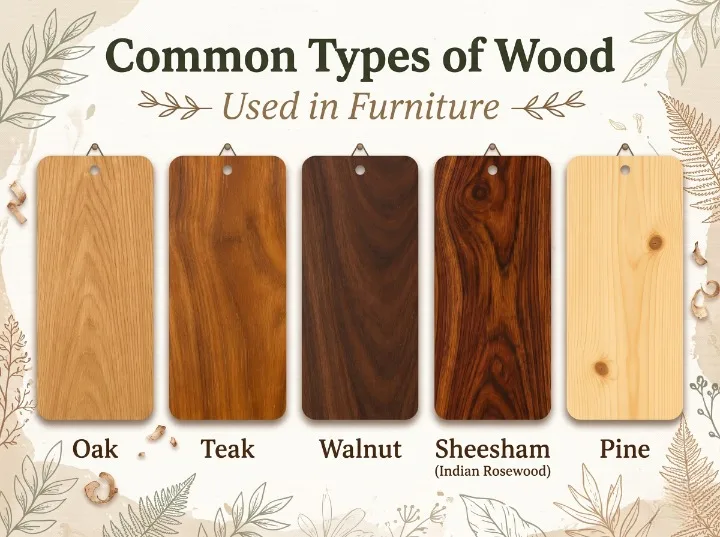
Not all solid wood is the same. Each type has its own strengths, look and price range. Here are the most common ones.
Sheesham (Indian Rosewood)
Sheesham is one of the most popular woods in India, and for good reason. It is hard and durable, with attractive grain patterns that range from golden to deep brown. It works beautifully for beds, dining tables, sofas and cabinets.
Good to know: Sheesham is strong and widely available, but it is a natural material, so slight colour variation between planks is normal and part of its charm.
Teak
Teak has long been treasured for its strength and natural resistance to moisture and insects. It is a premium choice, often used for high-quality furniture and even outdoor pieces.
Good to know: It generally costs more than other woods, but its longevity often justifies the investment.
Mango Wood
Mango wood is a lovely, budget-friendly option. It is moderately hard, with a light to medium tone and interesting grain. It is also widely seen as a more sustainable choice, since the trees are often harvested after their fruit-bearing years.
Good to know: It suits casual and everyday pieces well, though it may be a little softer than sheesham or teak.
How to Choose Between Them
If your priority is long-term durability and you have the budget, teak is hard to beat. If you want a strong yet reasonably priced all-rounder, sheesham is a favourite. If you are working with a tighter budget but still want real wood, mango is a smart place to start.
Solid Wood vs Engineered Wood: An Honest Comparison
It would not be fair to pretend solid wood is perfect for everyone. Let us compare them fairly.
| Feature | Solid Wood | Engineered Wood |
|---|---|---|
| Lifespan | Very long with care | Shorter, depends on grade |
| Price | Higher upfront | Lower upfront |
| Repairability | Can be sanded and refinished | Hard to repair once damaged |
| Weight | Heavy | Lighter |
| Moisture handling | Good if well seasoned | Can swell if low grade |
| Look | Natural, unique grain | Uniform, printed finishes |
| Resale value | Good | Usually low |
When solid wood makes the most sense: For pieces you use daily and expect to keep for years, such as beds, dining tables, wardrobes and sofa frames.
When engineered wood can still work: For temporary setups, rented homes, children’s items that will be outgrown quickly, or large wardrobes where weight and budget are concerns. Good plywood in particular can be a sensible choice for certain parts.
A balanced approach works well for many homes: solid wood for the main, high-use pieces and quality engineered options where it makes sense.
Is Solid Wood Furniture Worth the Price?
This is the question everyone asks, and it deserves a straight answer.
Yes, solid wood usually costs more upfront. But price and value are not the same thing.
Imagine two options. One costs less but needs replacing every five years. The other costs more but lasts twenty. Over two decades, you would buy the cheaper piece four times. Suddenly, the supposedly expensive choice looks much more reasonable, and you also avoid the hassle of replacing and disposing of old furniture.
There is also an emotional side to it. Furniture that is built well tends to be looked after. People polish it, protect it and take pride in it. That relationship is rare with disposable pieces.
If your budget is limited, you do not need to fill your whole home with solid wood at once. Start with one or two important pieces, such as a bed or dining table, and add more over time.
How to Tell If Furniture Is Really Solid Wood
Unfortunately, some products are marketed as wood when they are not. Here are some simple ways to check.
- Look at the grain. Real wood grain is irregular and unique. If the pattern repeats exactly across the piece, it may be a printed finish.
- Check the edges and underside. On veneer or laminate furniture, you can often spot layers, seams or a different material at the edges and on the back.
- Feel the weight. Solid wood is generally heavier than engineered alternatives.
- Look at the cut ends. The ends of solid wood show growth rings or a natural grain pattern. Pressed boards show a uniform, crumbly or layered texture.
- Notice the warmth. Real wood feels warm and slightly textured to the touch, not plasticky or perfectly smooth.
- Ask clear questions. Ask the seller what each part of the furniture is made from: the top, the frame, the drawers and the back panel. Vague answers are a warning sign.
- Ask for the wood type. A genuine seller will name the exact wood, whether it is sheesham, teak or mango.
What to Look For Before You Buy Solid Wood Furniture
Once you decide on solid wood, quality still varies. Keep these points in mind.
Well-Seasoned Timber
Wood contains moisture when freshly cut. If it is not properly dried (seasoned), it can warp, crack or shrink later. Good makers take this step seriously.
Strong Joinery
Look for solid joints such as mortise and tenon or dovetail, rather than relying on staples and glue alone. Strong joints keep furniture steady for years.
A Smooth, Even Finish
Run your hand across the surface. It should feel smooth, with no rough patches, drips or dull spots. A good finish protects against moisture, stains and daily wear.
Sturdy Construction
Press down on the corners, lean on the table and gently shake the piece. It should feel firm and quiet, with no wobbling or creaking.
A Clear Warranty and Honest Seller
A seller who stands behind the product will usually offer clear information about materials, care and warranty terms. Read these carefully before buying.
How to Take Care of Solid Wood Furniture
Solid wood is tough, but a little care goes a long way.
- Dust regularly with a soft, dry cloth. Avoid rough scrubbing.
- Wipe spills immediately. Liquids left on the surface can leave marks.
- Use coasters and mats. They protect against hot cups, wet glasses and scratches.
- Avoid direct sunlight for long periods. Strong sun can fade the finish and dry out the wood.
- Keep it away from damp walls and leaks. Moisture is wood’s biggest enemy.
- Avoid harsh chemicals. Use mild, wood-safe cleaners instead.
- Polish occasionally. A little wax or polish once or twice a year, as suggested by your seller, keeps the surface healthy.
- Control humidity. In very humid or very dry weather, good ventilation helps prevent warping or cracking.
- Lift, do not drag. Dragging heavy furniture can damage both the legs and your floor.
Frequently Asked Questions
1. Why is solid wood furniture becoming popular again? People want furniture that lasts, can be repaired and adds warmth to a home. Rising interest in sustainable living and quality craftsmanship has also helped.
2. Is solid wood furniture better than engineered wood? For long-term use, usually yes. It is more durable and easier to repair. Engineered wood can still be a practical choice for budget or temporary needs.
3. Which wood is best for furniture in India? Sheesham and teak are among the most popular. Mango wood is a good budget-friendly option. The right choice depends on your budget and how you plan to use the piece.
4. How long does solid wood furniture last? With reasonable care, it can last for decades. Many pieces are passed from one generation to the next.
5. How can I check whether furniture is solid wood? Look at the grain, check the edges and back, feel the weight and ask the seller to confirm the material of each part.
6. Does solid wood furniture need a lot of maintenance? Not really. Regular dusting, quick spill cleanup and occasional polishing are usually enough.
7. Can solid wood furniture be repaired? Yes. Scratches, fading and loose joints can often be fixed by a skilled carpenter.
For more info, contact: Support@mamtafurniture.in
Follow our Instagram : Mamta Furniture