

Pick the finish for the room and the decision gets easier. A light dining table suits a smaller space, a dining corner that gets little daylight, or a floor that is already dark. A dark table suits a bright room, pale walls and floors, and homes that want a heavier, more formal dining area. Neither one wins on its own.
With solid Sheesham, which is the wood we work in at mamta furniture, there is one more thing worth knowing before you start comparing swatches. Light and dark come from the polish, since the wood stays Sheesham either way. The same planks can be finished in honey, teak, walnut or mahogany tones, and that finish changes how a table behaves in your home more than the species does.
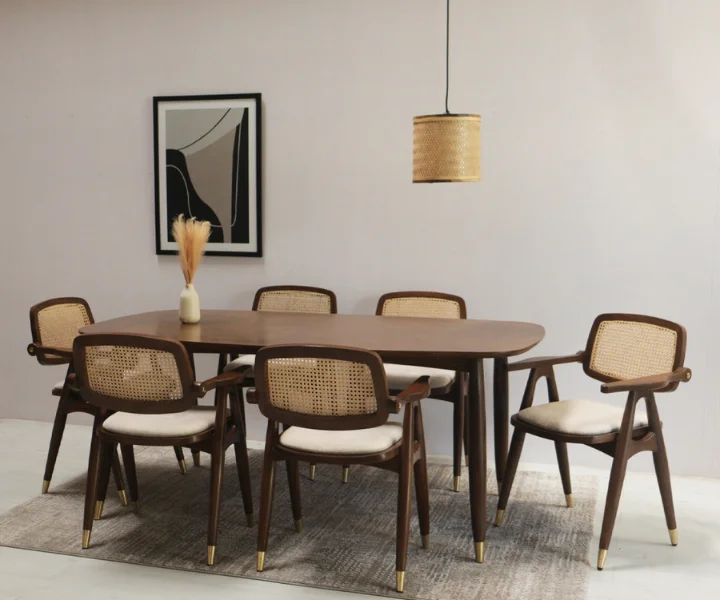
Is dark or light wood furniture better?
Neither is better in general. Light finishes make a dining area feel wider and let dust and small scratches blend in. Dark finishes feel richer and more formal, and they hide food and oil marks. The better one is whichever suits your floor, your daylight and the way your family really uses the table.
The details are where the choice gets real. A honey finish reflects more light, so a dining corner with one small window feels less boxed in. It also keeps a table from looking heavy in a compact flat. The trade is that tea rings and oil marks show up as darker patches, and under a cool white tubelight a honey top can look flat and slightly yellow.
A walnut or mahogany finish does the opposite. It gives a room weight and a settled, formal feel, and it looks its best in daylight. It also shows dust faster, especially on a polished top, and white water haze from a hot dish or a damp glass is far more visible against a deep colour. Scratches work on contrast too. A fine scratch in a dark finish reads as a pale line, because the wood underneath is lighter than the polish on top.
| What you notice | Light finish (honey) | Dark finish (walnut, mahogany) |
|---|---|---|
| Feel of the room | Wider, brighter | Cosier, more formal |
| Dust | Blends in | Shows quickly on polished tops |
| Fine scratches | Hardly visible | Pale lines stand out |
| Tea, oil and food marks | Show as darker rings | Mostly disappear |
| Water haze and heat marks | Less obvious | Clearly visible as white patches |
| Where it works best | Dim rooms, small dining corners, dark floors | Bright rooms, pale walls, ivory tile or marble |
| Pairs well with | Cane, rattan, deep wall colours | Brass, cream upholstery, light stone |
Same Sheesham, different finish
Most advice online about light wood is written about oak or ash, which are pale before any polish goes on. Sheesham does not behave that way. Its heartwood is a golden to deep brown with darker streaks running through the grain, so the lightest honest tone you can get from it is honey, and nothing close to a bleached Scandinavian pale. If that pale look is what you are after, a Sheesham table will not give it to you, and we would rather say so now than have you find out when the table arrives.
What Sheesham does give you is grain that stays visible through every finish. Honey lets the grain glow, teak and walnut add depth, and mahogany pulls the whole table towards red brown. Most tables in our dining tables collection come in three finishes, and the polish is applied by our own finishing team after the table is made, in the shade you choose. That order matters. You are not picking from a rack of finished tables in fixed colours, so you can ask for the tone that fits your room. The same goes for chairs and benches that sit with the table.
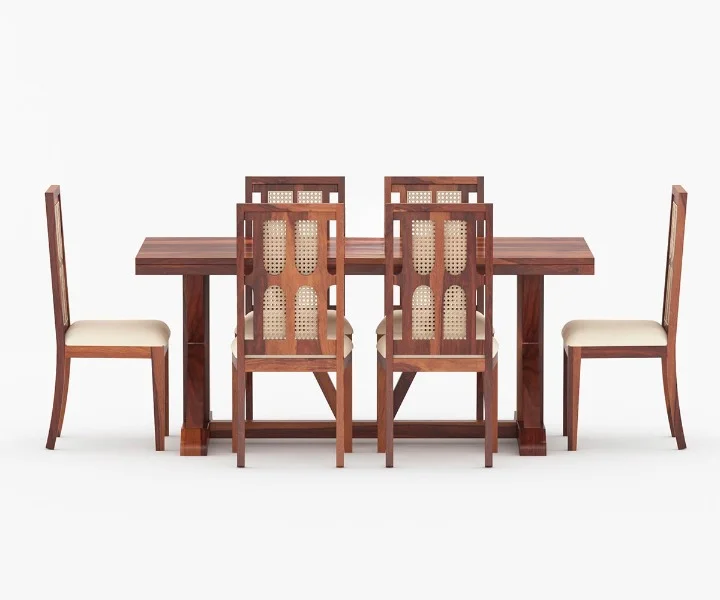
How to know what colour dining table to get
Start with three things in this order: your floor, the light at the table, and how your household uses it. The floor tells you how much contrast you can take, the light tells you whether a dark top will feel rich or heavy, and daily use tells you which marks you can live with.
Your floor
The floor takes up more of the picture than most people expect, and it is the easiest thing to get wrong. On ivory or white vitrified tile and on marble, a honey table can fade into the floor, so a teak or walnut finish gives the table a clear outline. On a dark floor, whether that is dark wood, grey tile or deep stone, a light finish keeps the table from disappearing. If your floor is a mid brown wood, avoid a table that is one shade off it. A near match looks like a mistake. Go clearly lighter or clearly darker.
A simple check helps here. Find a photo of the finish and look at it next to a tile or a plank of your actual floor, not on a screen with the brightness turned up.
The light at your table
A dining area beside a large window can carry a dark finish without trouble. A dining corner in the middle of the flat, where the only light is a ceiling fixture, usually cannot. Dark wood in a dim room absorbs what little light there is and makes the area feel smaller than it is.
Bulbs matter more than people think. Warm white bulbs deepen the red in mahogany and add gold to honey. Cool white tubelights flatten both. Look at your finish in the evening under the bulbs you actually use, because that is when a dining table gets the most use. If you are still choosing the lighting, our ceiling lights and chandeliers and floor lamps are worth sorting out before you settle on the table tone.
Your daily life
Think about what happens on this table over a normal week. If it doubles as a homework desk, takes tea and snacks all day and gets wiped down in a hurry, a darker finish is more forgiving of the marks that come from that. If you dislike wiping dust off every morning and a rarely used formal table is the plan, a lighter tone will make that job smaller. Pick the kind of maintenance you will honestly do.
What is a good colour for a dining table?
If you are unsure, a mid tone between honey and teak is the safest choice. It sits well against most floors and walls, forgives dust and everyday marks, and does not date quickly. Go lighter for a small room and darker for a large bright one, but only after checking the finish under your own lights.
Table size changes the answer. Colour carries more visual weight as the table gets bigger. A dark 8 seater in a small dining room dominates everything around it, while the same finish on a 4 seater feels like a deliberate choice. If your room is modest and you need the seating, go lighter, and look at compact pieces like the Eva 2 seater dining set. If you have the space, a dark top on a large table can anchor the whole room. Shape helps too. A round table reads lighter than a rectangle of the same size, so a deeper finish sits more easily on something like the Capital round dining table.
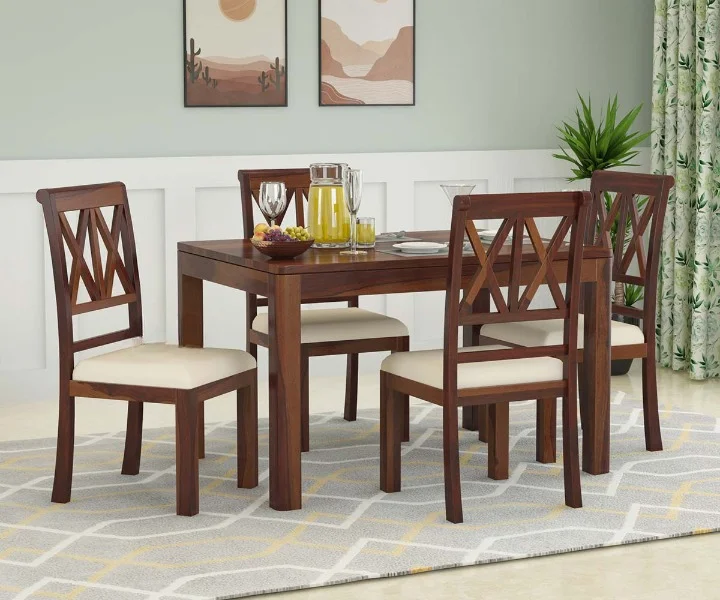
Is it okay to mix light and dark wood furniture?
Yes, and it usually looks better than a room where everything matches. A dark table on a lighter floor, or light chairs around a deeper table, adds contrast that a single tone cannot give. A few rules keep the mix looking planned.
Keep the undertones in one family. Sheesham carries warm red and gold tones, so it pairs naturally with other warm woods and looks awkward next to a cool grey stained wood. Let one tone lead, so that the largest surfaces share a shade and the other tone appears as an accent. Make the difference clear enough to look chosen. A honey chair at a teak table looks like a near miss, while a honey chair at a mahogany table looks deliberate. Finally, repeat each tone at least twice. A dark table with a dark sideboard, and light chairs with a light bench, reads as a plan. A single dark piece surrounded by light ones reads as an accident. Cane is an easy way to bring the lighter tone in, as on the Boston Solid Wood Rattan Cane Dining Table.
Because we finish to order, you can ask for the table in one finish and the chairs or bench in another. A rug under the table can also bridge the two tones if the contrast feels sharp.
Common mistakes when choosing a finish
The most common one is choosing from a phone screen. Screens brighten and shift colour, so a finish that looked balanced online can arrive redder or darker than expected. The second is matching the table to the floor too closely, which flattens the whole dining area. The third is forgetting that chairs make up about half of what you see at a dining set, so a pale table with heavy dark chairs changes the balance of the whole room. The last is going dark because it feels premium, in a room that does not have the light to carry it.
Whenever it is possible, see the finish in person. Our studios let you look at tones in real light, and you can find the nearest one on our studios page.
How we finish tables at mamta furniture
Every table here is 100% solid Sheesham, with no MDF or plywood, made in our own factory from logs that are cut, treated, seasoned and then crafted. The finish comes last, and it is done by our polish team in the shade you pick, with custom finishes available on request.
If you cannot decide between two tones, ask for photos of both on the same piece.
Seeing the tones on real pieces
Once you know which direction suits your room, the quickest check is to look at finished pieces. Our solid wood dining tables list the finish options on each table, and our solid wood dining sets pair a table with chairs or a bench in a matching finish, which sidesteps most of the mixing questions above. Hold the finish against your floor and your bulbs before you decide.
A few more questions
Is dark wood or light wood more timeless?
Both are. Dark finishes have long been tied to traditional and formal rooms, and light finishes to simple, airy interiors. A mid tone has the best record of staying out of fashion’s way.
Does dark wood show scratches?
Yes, in a specific way. A scratch that breaks through the polish exposes lighter wood, so it shows as a pale line on a dark finish and hardly at all on a honey one. Dark finishes hide food and oil marks, but they are less forgiving of scratches and dust.
Which colour shows less dust?
Light and mid tones hide dust best. Dust is grey, so the closer your table is to that tone, the less it stands out. On a polished dark table it shows within a day.
Can I change the finish later?
A solid wood table can be polished again, and a darker finish is easier to go to than a lighter one. Going lighter means removing the existing finish first, so choose carefully the first time.
For more info, contact: Support@mamtafurniture.in
Follow our Instagram : Mamta Furniture