

Think about how much of your life happens on a bed. You sleep on it, of course, but you also read on it, scroll your phone on it, eat a late snack on it, and sometimes just sit on it after a long day and stare at the wall. If you sleep seven or eight hours a night, you spend roughly a third of your life there.
So why do most of us spend more time choosing a sofa or a TV than a bed?
Usually it is because bed shopping feels confusing. There are dozens of styles, sizes, woods and storage options, and every showroom has a different opinion. This bed buying guide is meant to cut through that noise. We will walk through the main types of beds, what each one is good for, how to pick the right size and material, and the mistakes worth avoiding before you pay.
Whether you are furnishing your first flat, upgrading an old bed that creaks every time you turn over, or setting up a guest room, this guide will help you buy with confidence.
Why Choosing the Right Bed Matters More Than You Think
A bed is not just a piece of furniture. It is the base of your sleep, and sleep affects almost everything else: your mood, your focus at work, your energy, even your patience with the people around you.
A badly chosen bed can quietly cause problems. A frame that is too short makes your feet hang off the edge. A weak slat system lets the mattress sag. A bed that is too big for the room makes the space feel cramped and awkward. None of these seem serious on day one, but they add up over months and years.
A well-chosen bed does the opposite. It supports your mattress properly, gives you room to move, fits the room comfortably and lasts for a decade or more. That is why a little planning before you buy pays off for a very long time.
Types of Beds: Which One Suits Your Home?
Let us start with the part most people want to know first: what kinds of beds are actually out there. Here are the most popular options and who they suit best.
1. Standard (Non-Storage) Beds
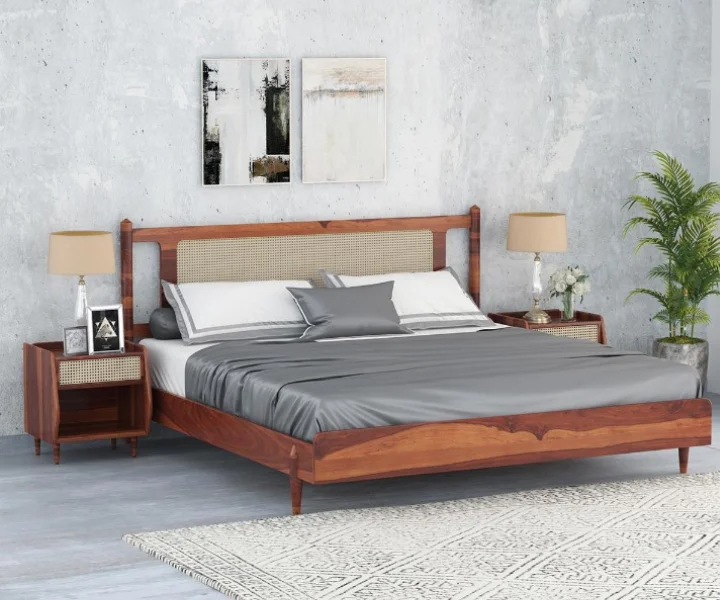
This is the classic bed: a headboard, a frame, a slat or plywood base and legs or a plinth. It is simple, clean and usually the most affordable choice.
Best for: Larger bedrooms where storage is not a concern, people who like a minimal look, and buyers working with a tighter budget.
Benefits: Easy to move, easy to clean underneath (if it has legs), and available in nearly every design, from modern to traditional.
Keep in mind: You will need separate wardrobes or cabinets for storage.
2. Storage Beds
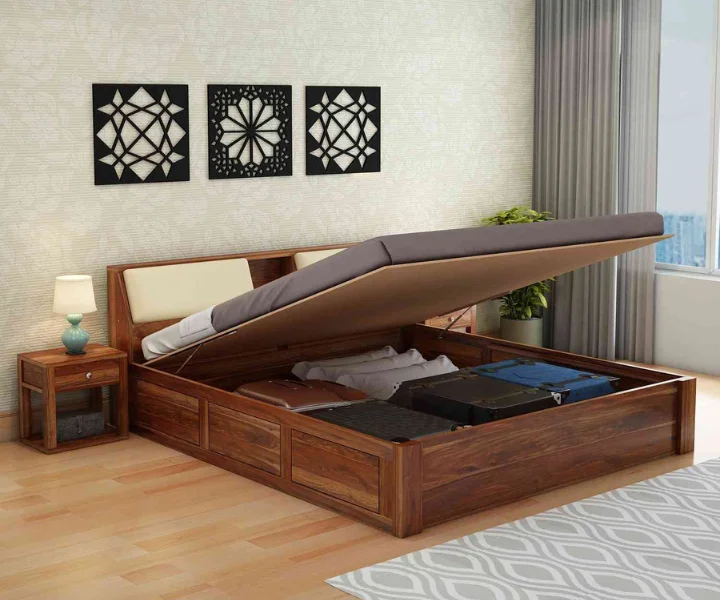
If your home never seems to have enough cupboard space, a storage bed can feel like a small miracle. There are three common types:
- Box storage: The base has a large enclosed compartment, usually accessed by lifting the mattress platform.
- Drawer storage: Pull-out drawers are built into the sides or foot of the bed. They are easy to reach without lifting anything heavy.
- Hydraulic storage: The whole mattress platform lifts up on hydraulic supports, revealing a big storage area. It is smooth and convenient.
Best for: Apartments, rented homes, small bedrooms and families who need room for bedding, winter blankets, suitcases and seasonal clothes.
Benefits: You gain a lot of storage without adding another piece of furniture.
Keep in mind: Storage beds are heavier and cost more than basic frames. Check the quality of the hydraulic mechanism or the drawer runners, because these are the parts that wear out first.
3. Platform Beds
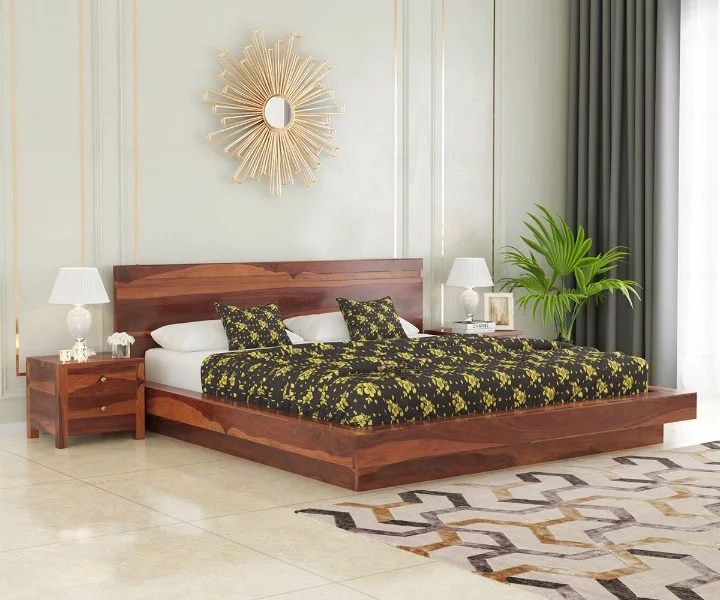
A platform bed has a solid or slatted base that supports the mattress directly, so you do not need a box spring. They sit lower to the ground and give a sleek, modern look.
Best for: Contemporary bedrooms and people who like a low, clean-lined design.
Benefits: Strong support, fewer parts and a very stylish appearance.
Keep in mind: Because they sit low, getting in and out can be harder for older family members or anyone with knee or back problems.
4. Four-Poster and Canopy Beds
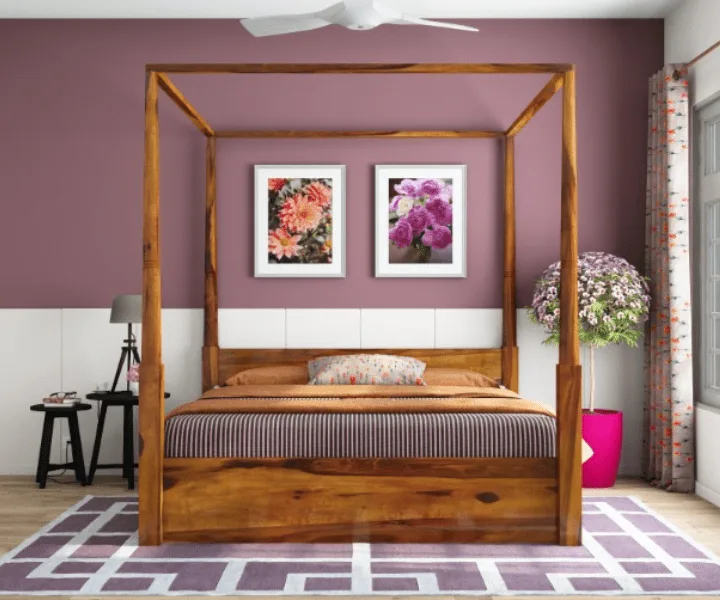
Tall posts at each corner give these beds a grand, traditional feel. Some are left open, while others support a canopy or curtains.
Best for: Large master bedrooms with high ceilings and people who love a royal, old-world look.
Benefits: Dramatic presence, strong character and a real sense of occasion.
Keep in mind: They need plenty of space, both in width and in height. In a small room, they can feel overwhelming.
5. Upholstered Beds
These beds have a headboard (and sometimes the frame itself) covered in fabric or leatherette. The padding makes them soft and inviting.
Best for: People who like to sit up and read or watch something in bed, and anyone wanting a plush, hotel-style look.
Benefits: Comfortable to lean against, warm in appearance and easy to match with your décor.
Keep in mind: Fabric can attract dust and stains, so choose a material that is easy to wipe or vacuum, especially if you have children or pets.
6. Bunk and Loft Beds
Bunk beds stack two sleeping spaces. Loft beds raise the sleeping area high and leave room underneath for a desk, a play area or a wardrobe.
Best for: Kids’ rooms, hostels, shared bedrooms and any home where floor space is very limited.
Benefits: They use vertical space cleverly. Children usually love them too.
Keep in mind: Safety comes first. Look for sturdy railings, a secure ladder and a solid build. Check the ceiling height before you buy.
Bed Size Guide: Get This Right Before Anything Else
Size is where many buyers go wrong. They fall in love with a design and only later realise it does not fit the room or their mattress. Here are the commonly used sizes in India, shown as approximate mattress dimensions:
| Bed Size | Approx. Mattress Size (inches) | Ideal For |
|---|---|---|
| Single | 36 x 75 | One child or teenager, small rooms |
| Diwan / Single XL | 36 x 78 or 42 x 78 | One adult who likes extra room |
| Double | 48 x 75 | Compact room, one person who sleeps wide |
| Queen | 60 x 78 | Couples, standard master bedrooms |
| King | 72 x 78 | Couples who want more space, larger rooms |
Sizes can vary slightly between brands, so always confirm the exact mattress dimensions with the seller.
A Simple Rule for Checking Fit
Measure your room and then subtract the bed’s length and width. You should leave at least 24 to 30 inches (roughly 60 to 75 cm) of walking space on the sides and at the foot of the bed. Less than that and the room feels crowded. Remember to account for the swing of doors, wardrobe doors and any bedside tables.
If you are choosing a king size bed, check the room carefully. A bedroom smaller than about 12 x 12 feet can start to feel tight once you add side tables and a wardrobe.
Choosing the Right Material for Your Bed
The material decides how long your bed lasts, how it looks and how much it costs. Here are the common options.
Solid Wood (Sheesham, Teak, Mango, Oak)
Solid wood is the traditional favourite, and for good reason. It is strong, durable and can last for decades. Sheesham is especially popular in India for its attractive grain and sturdy build. Teak resists moisture and insects well, while mango wood is a good-value option.
Pros: Long life, natural beauty, repairable and polished again if scratched.
Cons: Heavier and usually costlier than engineered options. Wood also reacts to humidity, so quality seasoning matters.
Engineered Wood (MDF, Particle Board, Plywood)
Engineered wood is made by pressing wood fibres, chips or veneers together. Good plywood is very strong. MDF and particle board are lighter on the pocket but handle moisture less well.
Pros: Affordable, available in many finishes and good for modern designs.
Cons: Quality varies a lot. Lower grades can swell or weaken with damp, and screws can loosen after repeated assembly.
Metal (Iron, Steel)
Metal frames are slim, strong and often budget-friendly. They suit modern and industrial styles.
Pros: Sturdy, easy to assemble and not bothered by termites.
Cons: Can feel cold or less cosy, and cheap welding can squeak over time.
A Practical Tip
If your budget allows, go with solid wood for the main frame and slats. If you need to save money, look for a hybrid: solid wood legs and rails with quality engineered panels in less stressed areas. Ask the seller exactly what each part is made from. Vague answers are a warning sign.
The Benefits of Buying the Right Bed
Let us talk about what you actually gain when you choose well.
Better sleep quality. A frame that supports your mattress evenly helps your spine stay comfortably aligned. You are less likely to wake up with stiffness or aches.
More usable space. Smart choices, like a storage bed, can free you from buying extra cabinets. In a smaller home, that makes a big difference.
A longer lifespan for your mattress. Many mattresses wear out early not because they are poor quality, but because the bed base is weak or the slats are spaced too far apart. A good base protects your investment.
A bedroom that looks and feels finished. The bed is the centrepiece of the room. When it matches your style, everything else falls into place more easily.
Better value over time. A well-built bed might cost more today, but it does not need replacing in three years. Spread across a decade, it is often the cheaper choice.
Bed Buying Tips: What to Check Before You Pay
Here is the practical checklist we recommend running through before you finalise any purchase.
1. Decide Your Budget, but Think in Years
Instead of asking “How cheap can I go?”, ask “How long do I want this to last?” A bed you keep for twelve years at a slightly higher price is better value than one you replace after four.
2. Match the Bed to Your Mattress
Check the exact mattress size the bed is designed for. Also check the height of your mattress. A thick, plush mattress on a deep platform can leave you sitting too high or looking odd.
3. Inspect the Slats or Base
This is the most overlooked part. Look for closely spaced slats, ideally not more than 2.5 to 3 inches apart, because wide gaps let the mattress sag. Check that there is a strong centre support on larger beds, especially queen and king sizes.
4. Test the Build Quality
If you can visit a store, press down on the corners, give the bed a gentle shake and listen for creaks. Look at the joints. Well-built beds often use strong joinery or reinforced fittings rather than relying only on a few screws.
5. Check the Finish
Run your hand along the surface. It should feel smooth, with no rough patches, chipping or uneven polish. A good finish protects the wood from moisture and everyday wear.
6. Think About Your Lifestyle
Do you read in bed? Then an upholstered headboard may be worth it. Do you have small children or a pet? Choose easy-to-clean materials. Do you travel often and store luggage? Go for a storage bed.
7. Plan for Delivery and Assembly
Measure your doorways, staircase and lift before you order. A large frame that cannot get through the door is a very frustrating surprise. Also ask whether assembly is included and who handles it.
8. Read the Warranty and Return Terms
Know exactly what is covered, for how long and what you must do to claim it. A clear warranty usually shows confidence in the product.
How to Choose the Best Bed for Your Bedroom: A Quick Decision Guide
Still unsure? Use this simple shortcut.
- Small bedroom or rented flat? Go for a hydraulic or drawer storage bed in queen size.
- Large master bedroom? A king size solid wood bed or a statement upholstered bed will suit it.
- Kids’ room? Consider a sturdy single bed, or a bunk bed if two children share.
- Guest room? A simple single or double bed, or a diwan, keeps it practical.
- Tight budget? Choose a well-made engineered wood or metal bed from a trusted seller, and prioritise a strong base over decoration.
- Love traditional style? Look at carved solid wood beds in sheesham or teak.
Frequently Asked Questions
1. What is the best type of bed for a small bedroom? A storage bed, particularly a hydraulic one, is usually the smartest choice. It gives you built-in space for blankets and clothes, which means you can skip an extra cabinet.
2. Which wood is best for a bed in India? Sheesham and teak are widely loved because they are strong and long-lasting. Mango wood is a good-value alternative. The best choice depends on your budget and how long you want the bed to last.
3. What size bed should a couple choose? Most couples are comfortable with a queen size. If your room is large and you like extra space, a king size is a lovely upgrade.
4. Is a storage bed good for your mattress? Yes, as long as it has a well-built base with proper ventilation or slats. A poor base can cause sagging, so check the quality before buying.
5. How long should a good bed last? A well-made solid wood bed can last 15 years or more with reasonable care. Good engineered wood beds typically last several years to a decade, depending on quality and use.
For more info, contact: Support@mamtafurniture.in
Follow our Instagram : Mamta Furniture