

Every home has that one spot where things pile up. A heap of folded T-shirts on the bed. Socks that never find their pair. Bedsheets stuffed into a bag because the wardrobe is full. If this sounds familiar, you probably do not need a bigger house. You need a good chest of drawers.
A chest of drawers is one of the most useful pieces of furniture you can own. It keeps clothes tidy, clears floor clutter and, if you pick well, adds real style to your room. But walk into any furniture store and you will find so many shapes, sizes and finishes that choosing one feels harder than it should.
This guide breaks it all down in plain language. You will learn about 10 popular types of chest of drawers, the main design styles, which materials last longest, and how to pick the right one for your space and budget.
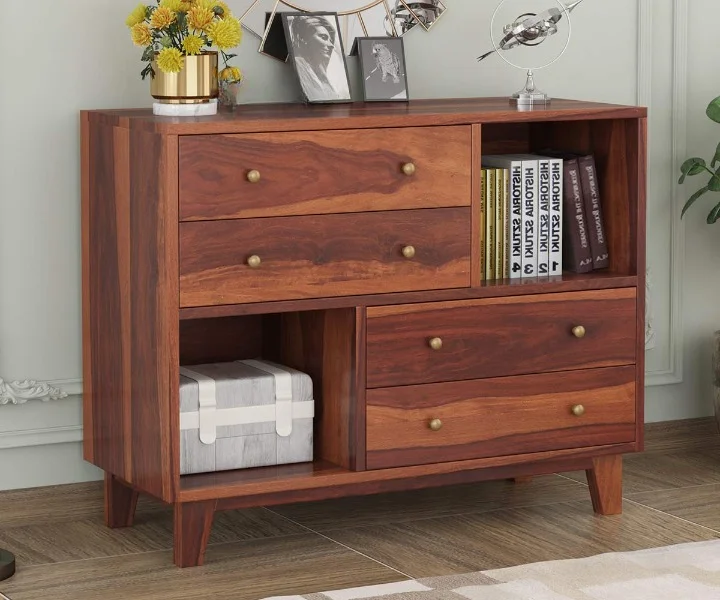
Why a Chest of Drawers Is Worth the Space
Wardrobes are great for hanging clothes, but they are not always the best place for everything. A chest of drawers gives you a few clear advantages:
- Easy access. Pull a drawer open and see everything at a glance, with no digging through shelves.
- Better organisation. Different drawers for different things: innerwear, tees, nightwear, kids’ clothes, accessories.
- Extra top surface. The top can hold a lamp, a mirror, a photo frame or a jewellery tray.
- Flexible placement. It fits in bedrooms, dressing areas, kids’ rooms, hallways and even living rooms.
- Great for small homes. When a full wardrobe will not fit, a slim chest still adds plenty of storage.
10 Types of Chest of Drawers
Here are the most popular kinds, what they are best for and what to watch out for.
1. Standard Chest of Drawers
This is the classic, all-purpose option: a rectangular unit with three to five drawers stacked from top to bottom. It suits almost any bedroom and works well for everyday clothing.
Best for: Most bedrooms, first-time buyers and general storage. Keep in mind: Check the drawer depth, because shallow drawers hold less than you expect.
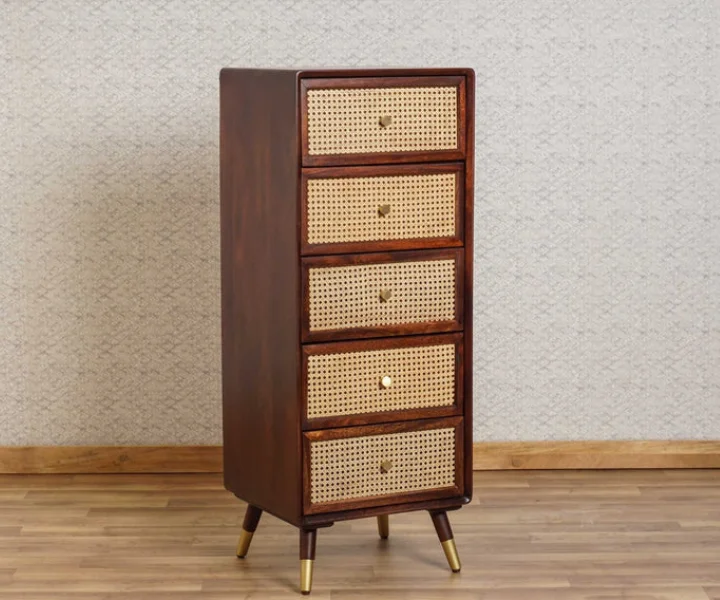
2. Tallboy Chest
A tallboy is a taller, narrower chest, usually with five or six drawers. It uses vertical space cleverly and takes up very little floor area.
Best for: Small bedrooms where floor space is tight. Keep in mind: The top drawers can be hard to reach for children, and tall units should be anchored to the wall for safety.
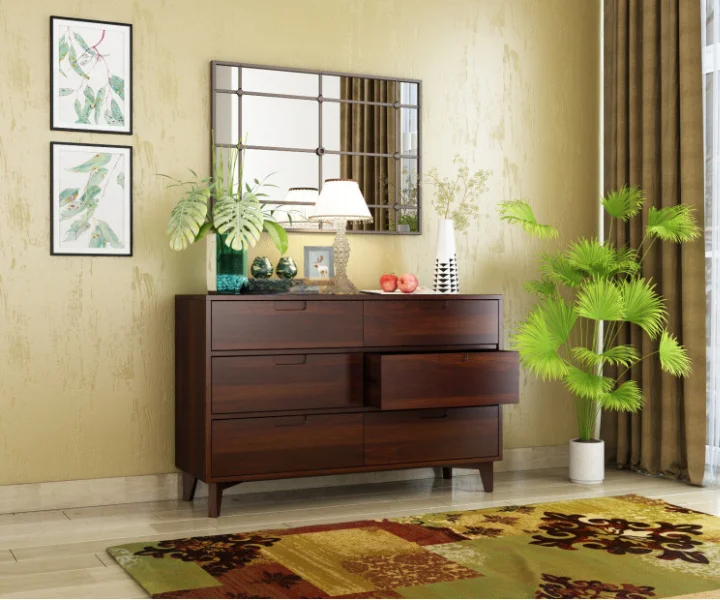
3. Wide (Lowboy) Chest
A lowboy sits low and spreads wide, often with two rows of drawers side by side. It also doubles nicely as a TV unit or a dressing table base.
Best for: Wider walls, bedrooms with space, and people who want a surface at a comfortable height. Keep in mind: It needs more wall width, so measure carefully.
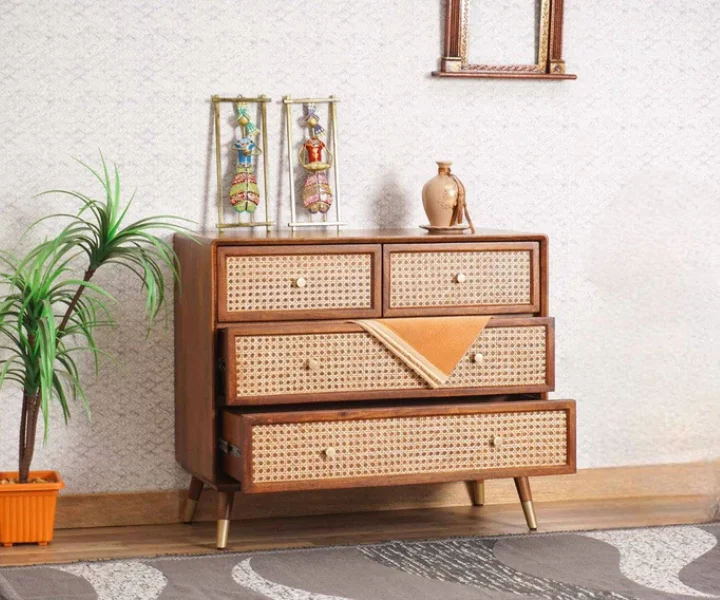
4. Bedside Chest
A small chest with two or three drawers that works as a bedside table. It gives you proper storage next to the bed instead of a single tiny drawer.
Best for: Storing night essentials like medicines, chargers, books and a torch. Keep in mind: Match its height to your mattress so it is comfortable to reach.
5. Double Dresser with Mirror
A wide chest paired with a mirror, either attached or standing separately. It blends storage with a place to get ready in the morning.
Best for: Master bedrooms and people who want a dressing area without a separate dressing table. Keep in mind: Good light matters, so place it near a window or add a lamp.
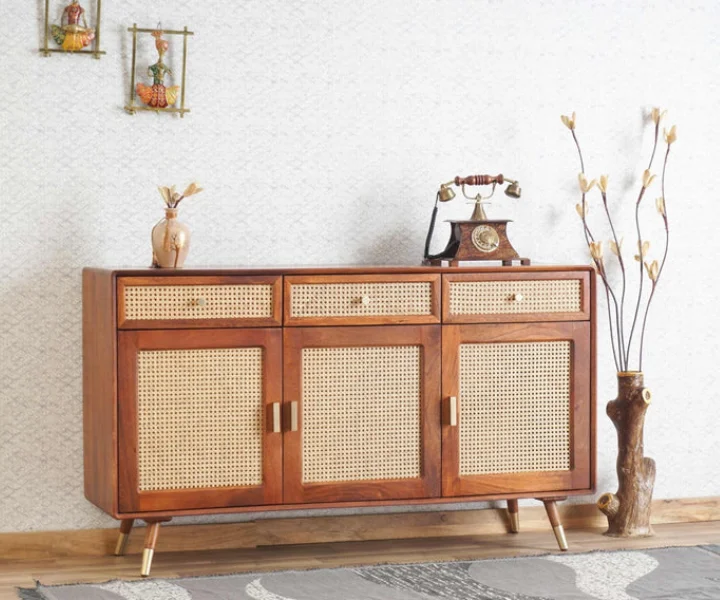
6. Chest with Cabinet Doors
This type mixes drawers with a door section, giving you hanging space, shelves or hidden storage.
Best for: Storing bulkier items like folded blankets, bags or shoes, along with regular clothes. Keep in mind: Check that the doors have enough clearance to open fully.
7. Vertical Slim Chest
A narrow, space-saving chest that fits into gaps beside a bed, a wardrobe or a doorway.
Best for: Apartments and tight corners. Keep in mind: Drawer width is limited, so it is better for smaller items than bulky clothes.
8. Kids’ Chest of Drawers
Built with children in mind, these are usually lower, with rounded edges, easy-grip handles and sometimes playful colours.
Best for: Children’s bedrooms and nurseries. Keep in mind: Look for sturdy drawer stops so little hands cannot pull a drawer fully out, and pick a design your child will not outgrow too quickly.
9. Chest with Hidden or Secret Compartments
Some chests include a concealed drawer or a locking compartment for valuables like documents, jewellery and cash.
Best for: Anyone who wants a bit of extra security at home. Keep in mind: Do not treat it as a replacement for a proper safe if you have expensive items
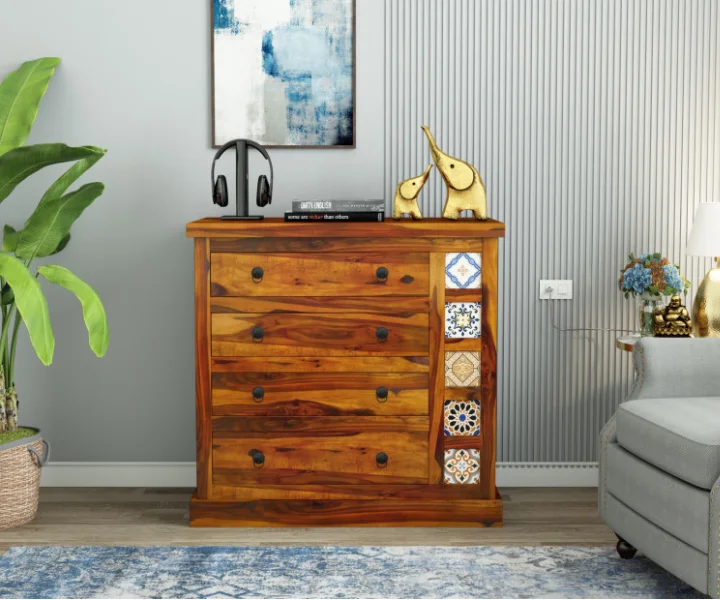
10. Multi-Purpose Chest (Storage Plus Seating or Display)
These pieces combine drawers with an open shelf, a bench top or a display area. Some even include a pull-out tray or a desk surface.
Best for: Smaller homes that need furniture to work double duty. Keep in mind: Complex designs have more moving parts, so check the build quality closely.
Popular Chest of Drawers Styles
The style you choose decides how the piece feels in your room.
Modern and Minimal: Clean lines, flat fronts and simple handles. This style suits contemporary apartments and works well in neutral colour schemes.
Classic and Traditional: Carved details, rich wood tones and decorative knobs. It adds warmth and a sense of heritage, especially in homes with wooden beds and cabinets.
Rustic: Natural wood with visible grain, a slightly rough texture and a handmade feel. It gives rooms a cosy, relaxed look.
Scandinavian: Light wood, slim legs and simple shapes. It makes small rooms feel open and airy.
Contemporary Mixed Finish: A combination of wood with a coloured or textured finish, often with metal accents. It suits people who like a fresh, slightly bold look.
Vintage-Inspired: Tapered legs, curved handles and soft colours. It brings a gentle retro charm.
Do not stress about sticking to one style rigidly. The best rooms often mix a little of everything, as long as the colours and proportions feel balanced.
Best Materials for a Chest of Drawers
Material decides how long your chest lasts and how it looks as the years pass.
Solid Wood
Sheesham, teak and mango wood are popular in Indian homes. Solid wood chest of drawers are strong, hold screws and joints well and can be repaired or polished if it gets scratched. It costs more but often lasts for decades.
Engineered Wood (Plywood, MDF, Particle Board)
These are lighter and more affordable, with a wide range of finishes. Good plywood is reliable, while lower-grade boards can swell with moisture or weaken over time. Always ask about the grade and the thickness of the board.
Metal
Metal chests are slim, sturdy and resistant to termites. They suit modern or industrial styles, though some people find them less warm in a bedroom.
Mixed Materials
Many chests combine a solid wood frame with engineered panels or metal handles. This can be a smart way to balance cost and strength, as long as the stressed parts, like the frame and drawer runners, are well made.
A quick tip: If your budget allows, choose a solid wood chest of drawers for pieces you will use every day and plan to keep for a long time.
How to Choose the Best Chest of Drawers: 8 Smart Tips
1. Measure Your Space First
Before falling for a design, measure the wall width, the ceiling height and the floor space. Leave enough room in front so drawers can open fully. A good rule is at least 40 inches (about 100 cm) of clearance in front of the chest.
2. Decide What You Will Store
Think about your actual clothes. Bulky sweaters and jeans need deeper drawers. Innerwear and accessories do fine in shallow ones. A mix of drawer sizes is ideal for most people.
3. Count the Drawers Honestly
More drawers are not always better. Five good-sized drawers can be more useful than eight tiny ones. Choose according to how you fold and organise.
4. Check the Drawer Quality
This is where cheaper chests often fail. Look for smooth runners, solid drawer bottoms and strong joints at the corners. Open and close each drawer a few times. It should glide quietly without sticking or tilting.
5. Look at the Back Panel and Base
A thin back panel can make the whole piece wobble. A sturdy back and a solid base keep the chest stable, even when fully loaded.
6. Match the Height to Its Purpose
A tallboy saves space but stops being practical if you cannot reach the top drawer. A low chest works better as a surface for a TV or mirror. Pick the height that suits how you will use it.
7. Think About Safety
If you have small children, choose a chest with drawer stops and consider anchoring tall units to the wall. Rounded edges and a stable base reduce the risk of accidents.
8. Stay Within Budget, but Think Long Term
A chest that costs a little more but lasts ten years is usually better value than a cheaper one that needs replacing in three. Compare materials, hardware and warranty before deciding.
How to Care for Your Chest of Drawers
A little maintenance protects your investment.
- Dust regularly with a soft dry cloth.
- Wipe spills quickly to protect the finish.
- Do not overload drawers. Heavy items can strain the runners and bottoms.
- Keep it away from damp walls and direct, strong sunlight.
- Tighten screws and handles every few months.
- Use drawer liners to protect clothes and keep scents fresh.
- Polish solid wood occasionally, as advised by your seller.
Frequently Asked Questions
1. What is a chest of drawers used for? It is used to store clothes, linen and small items, and its top can also hold decor, a mirror or a lamp.
2. How many drawers should a chest of drawers have? Most people are comfortable with four or five drawers. Choose the number based on how much you need to store and how easy the drawers are to reach.
3. What is the difference between a chest of drawers and a dresser? A chest of drawers is usually taller and narrower, while a dresser is wider and often has a mirror attached. In everyday use, the two terms are often mixed.
4. Which material is best for a chest of drawers? Solid wood chest of drawers in sheesham or teak are the most durable. Good plywood is a sensible budget option.
5. How tall should a chest of drawers be? A standard chest is usually around 30 to 36 inches tall, while a tallboy can reach 45 inches or more. Choose a height that lets you reach the top drawer comfortably.
6. Should I anchor a chest of drawers to the wall? Yes, especially tall ones and in homes with children. It prevents tipping and is a simple safety step.
7. Can I use a chest of drawers in the living room? Absolutely. A low, wide chest makes a good sideboard or storage piece.
For more info, contact: Support@mamtafurniture.in
Follow our Instagram : Mamta Furniture