

You have a sofa. You have a centre table. The room looks fine, but something is missing. There is an empty corner that feels a little too empty, or a wall that needs a bit of personality. So you decide to add a chair.
Then the confusion starts. Is it an accent chair or an armchair you need? The two terms get used almost interchangeably in shops and online, and some sellers use them to describe the very same piece. Yet they are not always the same thing, and picking the wrong one can leave you with a chair that looks great but is uncomfortable, or one that is comfortable but looks out of place.
This guide clears up the confusion in plain language. You will learn what each chair really is, how they differ in comfort, size, style and price, and exactly how to decide which one belongs in your living room.
Quick Answer: Accent Chair vs Armchair at a Glance
If you want the short version, here it is.
| Feature | Accent Chair | Armchair |
|---|---|---|
| Main purpose | Style and decoration | Comfort and relaxed seating |
| Size | Usually smaller and lighter | Usually larger and sturdier |
| Arms | May or may not have arms | Always has arms |
| Comfort level | Moderate, varies by design | High, built for long sitting |
| Style | Bold colours, patterns, unique shapes | Classic, cosy, often neutral |
| Best for | Corners, bedrooms, entryways, adding a pop of colour | Reading nooks, TV time, everyday lounging |
| Typical price | Wide range, design driven | Wide range, comfort and build driven |
The simplest way to think about it: an accent chair is chosen mostly for how it looks, while an armchair is chosen mostly for how it feels. Many pieces do both, and that is where the lines blur.
What Is an Accent Chair?
An accent chair is a decorative chair designed to add colour, texture, shape or personality to a room. The word “accent” says it all. It is the small detail that makes the whole space feel finished, like jewellery on an outfit.
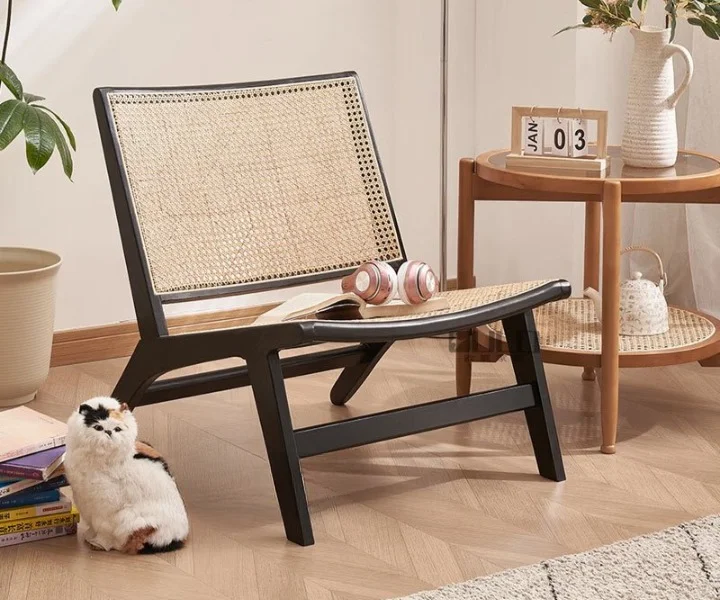
Key features of an accent chair:
- A statement look. It often comes in bold colours, interesting patterns, unusual shapes or standout materials.
- Compact size. Most accent chairs are smaller than full armchairs, so they fit into tight corners and small rooms.
- Flexible design. Some have arms, some do not. Some are upholstered, while others show off wooden or metal frames.
- Occasional seating. They are great for guests, quick conversations or a few minutes with a cup of tea, though some are comfortable enough for longer sitting.
- Easy to move. Many are light enough to shift around the house as needed.
Common styles: wingback accent chairs, slipper chairs, barrel chairs, tub chairs, wooden-frame chairs with cushioned seats, and cane-back designs.
What Is an Armchair?
An armchair is a comfortable single-seat chair with supports on both sides for your arms. It is built for relaxing, and the focus is on cushioning, back support and a seat you can sink into.
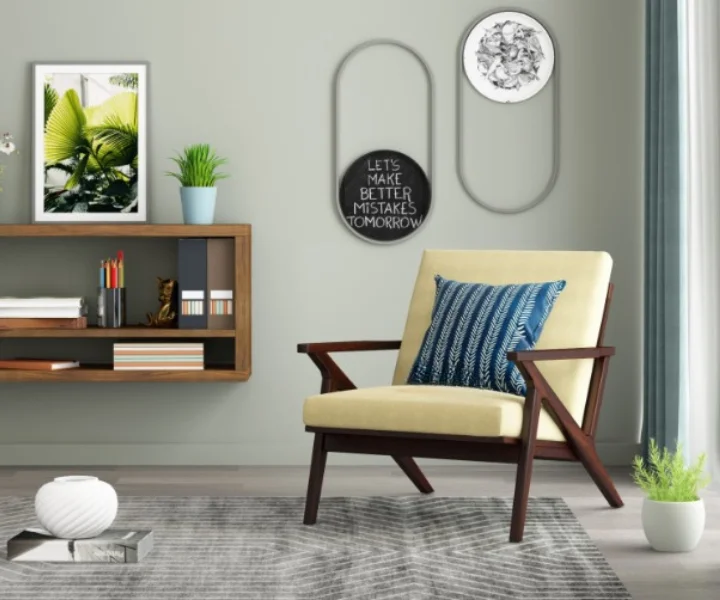
Key features of an armchair:
- Armrests. This is the defining feature. The arms give you somewhere to rest, make it easier to stand up and add to the sense of comfort.
- Generous size. Armchairs are usually wider and deeper than accent chairs, with more space to settle in.
- Comfort first. Thick cushions, supportive backs and often a slightly reclined angle make them ideal for long sitting.
- Sturdy build. They are made for regular, everyday use.
- Classic appeal. Many armchairs have a timeless, cosy look that suits most homes.
Common styles: club chairs, wingback armchairs, wooden-frame armchairs with cushions, lounge chairs, recliners and Bergère-style chairs.
Why the Terms Get So Confusing
Here is the honest truth: there is no strict rule that separates the two. An armchair can absolutely be an accent piece if it has a striking colour or design. And an accent chair can have arms and be quite comfortable.
Think of it this way:
- “Armchair” describes the structure: a chair with arms.
- “Accent chair” describes the role: a chair used to add style.
So a bold, patterned armchair placed in the corner of your living room is both. A simple armless slipper chair in a bedroom is an accent chair but not an armchair. Once you see it this way, the decision becomes much easier. You are really choosing between what the chair needs to do for you: look good, feel good or, ideally, both.
Accent Chair vs Armchair: The Detailed Comparison
Let us look at the differences that matter most in daily life.
1. Comfort
Armchair wins. If you plan to read for an hour, watch a film or sit with your phone for a while, an armchair’s deep seat, supportive back and armrests will keep you comfortable.
Accent chairs vary widely. Some are surprisingly cosy, while others are designed more for looks, with firm seats or upright backs. If comfort matters, always sit in the chair before buying, or at least check the seat depth, cushion thickness and back angle.
2. Size and Space
Accent chair wins for small spaces. A typical accent chair is around 24 to 30 inches wide, while armchairs often range from 28 to 36 inches or more. That extra width and depth makes a real difference in a compact living room.
Here is a rough guide to typical dimensions:
| Measurement | Accent Chair (approx.) | Armchair (approx.) |
|---|---|---|
| Width | 24 to 30 inches | 28 to 36 inches |
| Depth | 24 to 32 inches | 30 to 38 inches |
| Seat height | 17 to 19 inches | 17 to 19 inches |
| Overall height | 30 to 36 inches | 32 to 40 inches |
These are general ranges. Always check the exact dimensions of the specific chair you are considering.
3. Style and Visual Impact
Accent chair wins. If you want a chair that makes people look twice, an accent chair gives you more freedom. Bold colours, interesting legs, curved frames and unusual fabrics are all common.
Armchairs lean towards classic and cosy, but modern designs now come in many styles, so this gap is smaller than it used to be.
4. Durability and Build
Armchair has the edge. Because armchairs are designed for regular, long-term use, they are usually built with stronger frames and thicker padding. Accent chairs can also be very well made, especially with solid wood frames, but some are lighter and more decorative, so check the build quality.
5. Flexibility and Placement
Accent chair wins. Lighter and smaller, accent chairs can be moved from the living room to the bedroom, the entryway or the dining area without much effort. They also make easy extra seating when guests arrive.
Armchairs are better suited to a permanent spot, since they are heavier and larger.
6. Price
Both come in a huge range of prices. Cost depends far more on materials, craftsmanship and design than on the label.
- Frame: Solid wood frames cost more than engineered wood or metal.
- Upholstery: Premium fabrics and leather increase the price.
- Cushioning: High-density foam is worth the extra cost.
- Design detail: Carving, caning and special finishes add to the price.
In general, a simple armless accent chair may cost less than a large, well-padded wooden armchair, but a designer accent piece can cost more than a basic armchair. Compare on quality, not just the name.
When Should You Choose an Accent Chair?
An accent chair is the right call when:
- You want to add personality. A bold colour or interesting shape instantly lifts a neutral room.
- Your space is small. A compact chair fits where a bigger one cannot.
- You need extra seating for guests. It is easy to move and quick to set up.
- You are decorating a corner, bedroom or entryway. It fills empty space without taking over.
- You enjoy changing your décor. A light, movable chair makes it easy to refresh the room.
When Should You Choose an Armchair?
An armchair is the better choice when:
- Comfort is your top priority. If you will sit for long stretches, the extra cushioning and arms matter.
- You want a reading corner. An armchair with a side table and a lamp is a classic recipe for cosy evenings.
- You have a larger living room. There is room for a bigger piece with real presence.
- Elderly family members will use it. Armrests make sitting down and standing up much easier.
- It will be used every day. A sturdy armchair is made for regular wear.
- You want a matching set. Armchairs pair well with a sofa to create a complete seating arrangement.
Can You Combine Both?
Absolutely, and many well-designed living rooms do. A common approach is to pair a comfortable, neutral armchair with one bold accent chair on the other side of the room. This creates balance: one chair gives comfort, the other gives character.
You can also use two matching armchairs facing the sofa to create a conversation area, then add a small accent chair in a corner for visual interest.
A simple rule of thumb: Let one piece be the comfortable workhorse and the other be the stylish highlight.
How to Choose the Right Chair for Your Living Room
Follow these steps and you will make a confident decision.
Step 1: Decide the Main Purpose
Ask yourself honestly: will this chair be sat in daily for long periods, or will it mostly add style and serve as occasional seating? The answer usually points to your choice.
Step 2: Measure Your Space
Measure the corner or gap where the chair will go. Leave at least 24 inches of walking space around it, and around 14 to 18 inches between the chair and your centre table. Do not forget to account for the chair’s depth if it reclines or has a high back.
Step 3: Think About Your Existing Furniture
Look at the sofa, centre table and other furniture. The chair should complement them, not fight with them. If your sofa is plain, a patterned chair can add life. If your sofa is already bold, a calm, simple chair may balance the room.
Step 4: Pick the Right Frame
Solid wood frames are strong, durable and can be repaired or refinished. Popular choices in India include sheesham, teak and mango wood. If you are buying a wooden-frame chair, check that the joints are strong and the finish is smooth.
Step 5: Check the Comfort Details
- Seat depth: Around 18 to 22 inches suits most people.
- Seat height: Your feet should rest flat on the floor.
- Back support: A slight angle supports your spine.
- Cushioning: High-density foam keeps its shape longer.
- Armrest height: Arms should sit at a comfortable height for your elbows.
Step 6: Choose the Right Fabric
- Cotton and linen blends: Breathable and easy to maintain.
- Velvet: Soft and luxurious, though it can attract dust.
- Leatherette: Easy to wipe clean.
- Textured weaves: Hide everyday wear and add depth.
Step 7: Think About Colour
Neutral tones, such as beige, grey and cream, are safe and flexible. Bolder choices, like mustard, teal, rust or olive, work beautifully with natural wood and create a statement. If you are unsure, start with a neutral chair and add colour through cushions.
Step 8: Test Before You Buy
If possible, sit in the chair for a few minutes. Lean back, rest your arms and imagine reading or watching TV. A chair that feels great for five seconds may feel different after fifteen minutes.
Placement Tips: Where Should the Chair Go?
Where you put the chair affects how well it works.
- Beside the sofa: Creates an L-shaped seating group. Angle the chair slightly towards the sofa to encourage conversation.
- Opposite the sofa: Forms a classic conversation setup. Keep the seats within about 8 feet of each other so people can talk easily.
- In a corner: Perfect for an accent chair, ideally with a small side table and a lamp.
- By a window: A lovely reading spot with natural light.
- Near the TV: Ensure it does not block the view and that the angle is comfortable.
- In a bedroom or entryway: A compact accent chair adds function and style.
Leave a clear path through the room. A chair that blocks the walkway quickly becomes an annoyance.
Frequently Asked Questions
1. What is the main difference between an accent chair and an armchair? An accent chair is chosen mainly for style and may or may not have arms. An armchair is defined by its armrests and is usually built for comfort and longer sitting.
2. Is an armchair the same as an accent chair? Not always. An armchair can be used as an accent piece, but not every accent chair has arms.
3. Which is better for a small living room? An accent chair is usually better because it is more compact. A small armchair can also work if you measure carefully.
4. Can I use an accent chair for reading? Yes, if it has a comfortable seat and good back support. For long reading sessions, an armchair is generally better.
5. How many chairs should I add to my living room? One or two is usually enough for most rooms. Make sure there is still plenty of space to walk around.
6. What colour accent chair is best? It depends on your room. Neutral shades are the safest, while bold colours like mustard, teal or rust make a stronger statement.
7. Are wooden-frame chairs a good choice? Yes. A solid wood frame is strong, long-lasting and can be repaired if it gets damaged.
For more info, contact: Support@mamtafurniture.in
Follow our Instagram : Mamta Furniture