

The living room is where your home introduces itself. It is the first place guests sit, the spot where the family watches a movie on a lazy Sunday, and the corner where somebody inevitably falls asleep with a cup of chai going cold. At the centre of all this sits the sofa.
For years, many of us thought wooden sofas were old-fashioned: heavy, stiff and a little too formal. That picture has changed completely. Today’s modern wooden sofa designs are clean, comfortable and surprisingly versatile. They pair real wood frames with plush cushions, slim lines and fresh finishes that suit apartments and large homes alike.
If you are thinking about a new sofa, this guide will help you. We will look at popular modern styles, the best woods, how to pick the right size and cushioning, and simple tips for making your living room look as good as it feels.
Why Choose a Wooden Sofa in the First Place?
Before looking at designs, it helps to understand why wood is such a smart base for a sofa.
Strength that lasts. A solid wood frame handles daily use, children jumping on the cushions and years of family gatherings without sagging or creaking. The frame is the skeleton of your sofa, and wood is one of the best skeleton materials there is.
Natural warmth. Wood adds a warm, grounded feel that metal and plastic cannot match. Even a simple design looks richer when real grain is visible.
Repairable and refinishable. If the wood gets scratched or the finish fades, a skilled carpenter can restore it. A broken particle board frame is rarely so forgiving.
Timeless style. Trends come and go, but wooden furniture adapts to almost any décor, from modern minimal to traditional Indian.
Better value over time. A wooden sofa may cost more at first, but you will not need to replace the frame every few years. You can even change the cushion covers or re-upholster later to refresh the look.
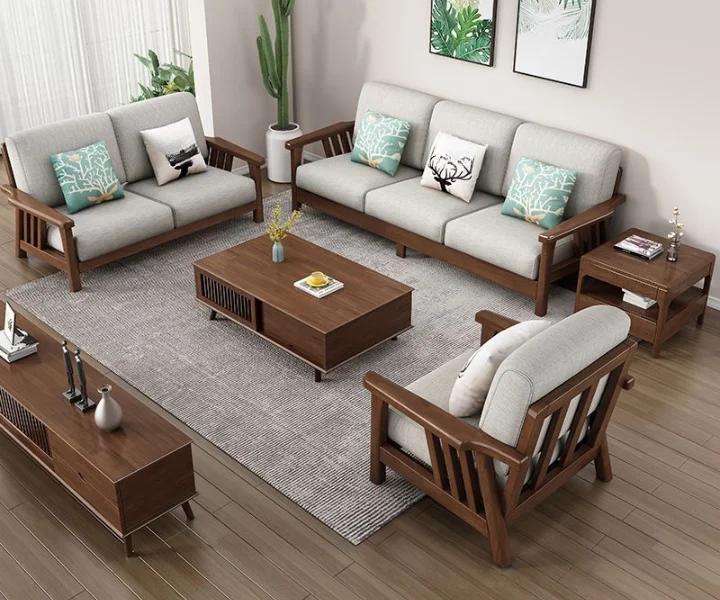
Verona Classic Wooden Sofa Set
10 Modern Wooden Sofa Designs for Your Living Room
Here are the most popular designs right now, along with who they suit best.
1. Clean-Line Minimalist Sofa
This design features a straight, simple wooden frame with slim armrests and neat cushions. There are no heavy carvings, only smooth lines and a calm look.
Best for: Modern apartments and people who like a tidy, uncluttered space.
2. Mid-Century Style Sofa
Characterised by tapered wooden legs, a slightly raised frame and gentle curves, this style brings a retro charm that never feels dated. The exposed wood legs make the sofa look light and airy.
Best for: Living rooms that want a stylish, slightly vintage touch.
3. L-Shaped Wooden Sofa
A corner sofa with a wooden base and cushioned seating that wraps around two walls. It seats more people and makes excellent use of corner space.
Best for: Large families, open-plan homes and anyone who loves stretching out. Keep in mind: Measure carefully, since L-shaped sofas take up a lot of floor space.
4. Wooden Sofa with Storage
The seat base lifts or slides open, revealing a hidden compartment for blankets, cushions or children’s toys.
Best for: Small homes where every inch counts.
5. Sofa Cum Bed (Wooden Frame)
By day it is a comfortable sofa. By night it opens into a bed for guests. A sturdy wooden frame makes the conversion smooth and reliable.
Best for: Studio flats, homes with occasional guests and multipurpose living rooms. Keep in mind: Check the mechanism quality, as it is the part that sees the most wear.
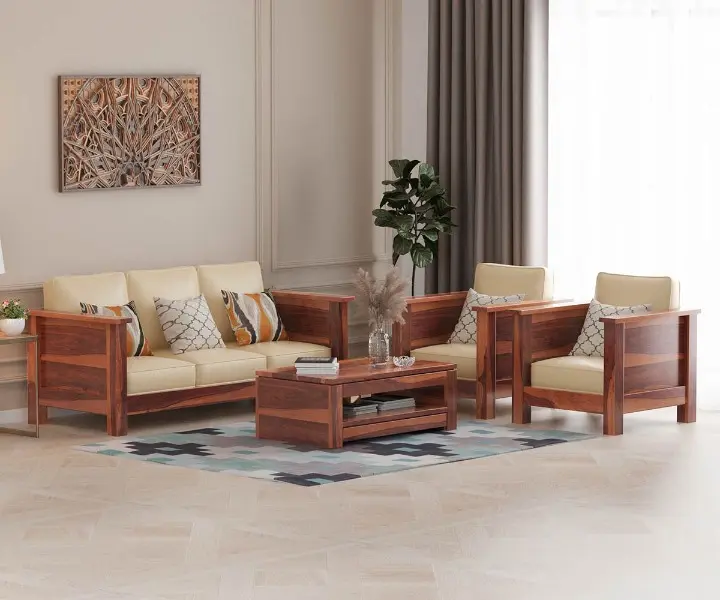
Emma Solid Sheesham Wood Sofa Set
6. Carved Traditional-Modern Sofa
This one blends classic hand-carved wooden details with a cleaner, more modern shape. It keeps the heritage look but feels lighter and more comfortable.
Best for: Homes that love Indian craftsmanship but want a fresher feel.
7. Wooden Sofa with Open Arms
Instead of fully cushioned arms, this design has wooden armrests that form part of the frame, often slim and flat. They double as handy spots to rest a cup or a book.
Best for: Contemporary rooms and people who prefer a structured look.
8. Scandinavian-Inspired Sofa
Light wood tones, soft neutral cushions and slender legs define this design. It makes small rooms feel bright and open.
Best for: Compact spaces and fans of a calm, airy style.
9. Wooden Sofa with Slatted Back
A row of vertical or horizontal wooden slats forms the backrest. It is stylish, adds texture and gives the sofa a lovely sculptural look.
Best for: People who want a design statement without too much fuss.
10. Two-Seater and Three-Seater Compact Sets
Smaller wooden sofa sets, often paired with a matching armchair or centre table, suit apartments and cosy living rooms.
Best for: Small to medium rooms that need a balanced, complete setup.
Best Types of Wood for a Sofa
The wood you choose affects the durability, look and price of the sofa.

Bahamas Sheesham Wood Sofa Set
Sheesham (Indian Rosewood)
Hard, durable and beautifully grained, sheesham is one of the most loved woods in Indian furniture. It handles heavy use well and finishes with a rich, warm tone.
Teak
Teak is naturally resistant to moisture and insects, making it one of the longest-lasting choices. It is a premium wood and usually costs more, but it can last for decades.
Mango Wood
A budget-friendly option with attractive grain. It suits everyday sofas well and is often considered a more sustainable choice.
Acacia
Strong and dense with a varied grain pattern. It is a good option for bold, rustic-looking frames.
Engineered Wood and Plywood
Good plywood can work well for parts of the frame and for hidden structure, but low-grade boards may weaken over time. If you choose a mixed design, ask the seller which parts are solid wood and which are engineered.
Quick tip: The frame should be made from properly seasoned wood. Unseasoned timber can warp or crack after a few months.
Choosing the Right Sofa Size for Your Living Room
A sofa that is too large makes a room feel crowded, while one that is too small feels lost. Here are common sizes to guide you.
| Sofa Type | Approximate Width (inches) | Ideal For |
|---|---|---|
| Single seater / armchair | 30 to 36 | Corners and accent seating |
| 2-seater | 50 to 60 | Small living rooms |
| 3-seater | 72 to 84 | Most standard living rooms |
| L-shaped | 90 to 110 on the long side | Large rooms and open plans |
Space Rules to Remember
- Leave walking space. Keep at least 30 to 36 inches of clear walking space around the sofa.
- Mind the centre table distance. Place a centre table about 14 to 18 inches from the sofa so it is easy to reach without bumping your knees.
- Check the doorway. Measure your door, lift and staircase before buying. A beautiful sofa that cannot enter your home is a heartbreak.
- Mark the floor. Use masking tape to outline the sofa’s footprint and see how it feels in the room.
Comfort Matters: What to Look for in Cushions and Seating
A wooden sofa should look good and feel good. The frame provides strength, but the cushioning decides comfort.
Foam Quality
High-density foam keeps its shape longer and supports your back better. Low-density foam flattens quickly and leaves the seat feeling tired.
Seat Depth and Height
Seat depth of around 20 to 24 inches suits most people. Deeper seats are great for lounging, while shallower ones are better for upright sitting. The seat height should let your feet rest flat on the floor.
Back Support
Check how the backrest feels. A slightly angled back with decent cushioning supports the spine and makes long sitting more comfortable.
Armrests
Wooden armrests look sleek, but they can feel hard. If you like to rest your arm or lie sideways, consider adding padded armrest covers or choose a design with soft arms.
Upholstery Fabric
Choose a fabric that suits your lifestyle.
- Cotton and linen blends: Breathable and easy on the skin, great for warm climates.
- Velvet: Soft and luxurious, but it can attract dust and pet hair.
- Leatherette: Easy to wipe clean and suitable for busy homes.
- Textured weaves: Hide everyday wear and add depth to the design.
If you have children or pets, pick darker or textured fabrics, and consider removable cushion covers that can be washed.
Colours and Finishes That Work for Modern Wooden Sofas
The finish of your wood shapes the mood of the room.
Natural and light tones: Honey, oak and light teak shades make rooms feel open and fresh.
Medium brown: A classic, welcoming colour that goes with almost everything.
Dark walnut or espresso: Rich, elegant and dramatic, perfect for larger rooms with plenty of natural light.
Painted or two-tone finishes: A white or soft grey frame with a natural wood top can create a modern, playful look.
Cushion Colour Ideas
- Neutral beige, cream and grey: Safe, calming and easy to match with décor.
- Earthy tones like olive, rust and mustard: Warm and trendy, great with wood.
- Navy or deep teal: Bold and sophisticated.
- Soft pastels: Gentle and cheerful, especially in bright rooms.
A simple rule: let the sofa be the main character and use accent cushions and throws to add colour.
Wooden Sofa vs Fully Upholstered Sofa: Which Is Better?
Many buyers wonder whether to go for a wooden-frame sofa with exposed wood or a fully upholstered one with the frame hidden. Both have their place.
Wooden sofa with visible wood: It has a lighter, more open look, and the exposed arms and legs add character. It also makes cleaning under the sofa easier. It suits rooms where you want the furniture itself to be part of the décor.
Fully upholstered sofa: It feels softer on all sides and often looks plusher. However, the frame is hidden, so you rely heavily on the seller’s word about what is inside.
The middle path: Many modern designs combine both, with a solid wood frame, visible wooden legs and arms, and generous cushions. This gives you comfort, style and the confidence of seeing real wood where it counts.
If you are unsure, sit on a few styles and pay attention to how the arms, back and seat feel after five minutes, not five seconds.
How to Style a Wooden Sofa in Your Living Room
A great sofa deserves a thoughtful setting.
- Layer with cushions. Mix sizes and textures, but keep to two or three colours.
- Add a throw blanket. It adds comfort and a lived-in feel.
- Choose a rug that anchors the space. The front legs of the sofa should ideally sit on the rug.
- Use side tables. A small wooden or metal side table gives you a spot for lamps, books and cups.
- Balance the wood tones. If your sofa is dark, let the coffee table or shelves be lighter, or the other way around, so the room does not feel heavy.
- Bring in greenery. A plant or two adds freshness against warm wood.
- Do not block natural light. Position the sofa so windows stay clear and the room feels open.
- Keep the focal point clear. Arrange seating towards the TV, a window or a feature wall.
Tips for Buying a Wooden Sofa
Keep this checklist in mind before you pay.
- Check the frame. Ask what wood is used and whether it is seasoned.
- Test the joints. Strong joinery, such as dowels or proper wood joints, lasts longer than staples alone.
- Shake it gently. A good sofa feels solid, with no creaks or wobble.
- Sit on it. Spend a few minutes sitting, leaning and lying down if you can.
- Look at the finish. It should be smooth, even and free of rough spots.
- Ask about the warranty. Understand what is covered and for how long.
- Consider delivery and assembly. Find out whether the sofa arrives assembled or in parts.
- Think long term. A slightly higher price for better materials is often better value.
How to Care for Your Wooden Sofa
A little attention keeps your sofa looking good for years.
- Dust regularly with a soft, dry cloth, and vacuum cushions gently.
- Clean spills quickly to avoid stains on fabric and wood.
- Keep it away from damp walls and strong direct sunlight, which can fade fabric and dry out the wood.
- Rotate and fluff cushions every week or two so they wear evenly.
- Polish the wood occasionally as advised by your seller.
- Tighten screws from time to time if you notice any looseness.
- Use coasters for cups and glasses on wooden armrests.
Frequently Asked Questions
1. Are wooden sofas comfortable? Yes, when they have good cushioning. The wood frame provides strength, while high-density foam and a suitable fabric provide comfort.
2. Which wood is best for a sofa set? Sheesham and teak are popular for their strength and durability. Mango wood is a good budget-friendly option.
3. How long does a wooden sofa last? With reasonable care, a solid wood frame can last for many years, often decades. Cushions and fabric may need refreshing sooner.
4. Is a wooden sofa suitable for a small living room? Absolutely. Choose a compact design with slim arms, raised legs or built-in storage.
5. How do I make a wooden sofa more comfortable? Add soft cushions, a lumbar pillow and a throw blanket. Choose high-density foam and a fabric you enjoy touching.
6. Can I change the upholstery later? Yes. One advantage of a wooden frame is that you can re-upholster or change cushions while keeping the strong base.
7. How much space should I leave around a sofa? Leave 30 to 36 inches of walking space, and keep a centre table at a comfortable distance of 14 to 18 inches.
For more info, contact: Support@mamtafurniture.in
Follow our Instagram : Mamta Furniture